
Search Engine Optimization (SEO) is a fundamental aspect of digital marketing that enhances a website’s visibility on search engines like Google. By optimizing various elements of your site, SEO helps attract more organic (non-paid) traffic, leading to increased brand awareness, customer engagement, and potential sales.
When users search for information, products, or services, search engines aim to provide the most relevant and authoritative results. Effective SEO ensures that your website appears prominently in these results, making it more likely for users to visit your site.
Why is SEO Important?
In today’s digital landscape, consumers frequently turn to search engines to find solutions and make purchasing decisions. Appearing on the first page of search results significantly increases the chances of attracting potential customers. Unlike paid advertising, SEO focuses on organic traffic, which can offer a more sustainable and cost-effective approach to building an online presence.
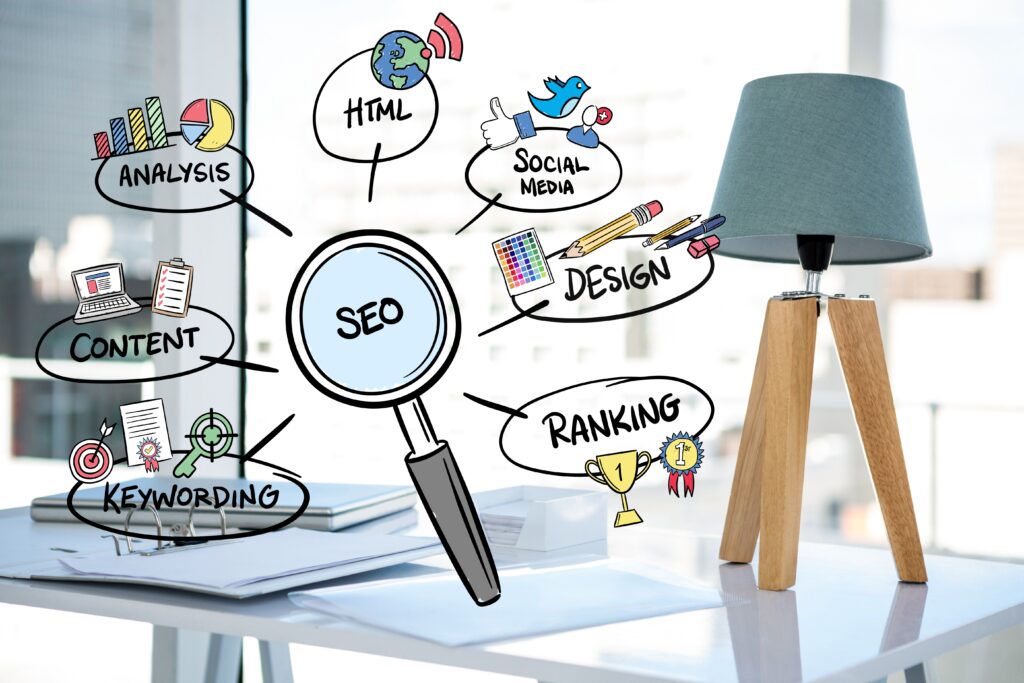
Key Components of SEO
- Keyword Research: Identifying the terms and phrases your target audience uses when searching for your products or services. Incorporating these keywords strategically into your content helps search engines understand your site’s relevance.
- On-Page Optimization: Ensuring that individual pages on your website are optimized for specific keywords. This includes optimizing title tags, meta descriptions, headers, and content to align with search intent.
- Technical SEO: Improving the technical aspects of your website to enhance its crawlability and indexability by search engines. This encompasses site speed, mobile-friendliness, secure connections (HTTPS), and structured data implementation.
- Content Creation: Developing high-quality, informative, and engaging content that addresses the needs and questions of your audience. Consistent content creation establishes authority and encourages visitors to spend more time on your site.
- Link Building: Acquiring backlinks from reputable websites signals to search engines that your content is trustworthy and valuable. Effective link-building strategies can significantly boost your site’s authority and rankings.
SEO Best Practices
- Create Valuable Content: Focus on producing content that provides genuine value to your audience, addressing their pain points and offering solutions.
- Optimize for Mobile: With the increasing use of mobile devices, ensure your website is responsive and offers a seamless experience across all screen sizes.
- Improve Page Load Speed: A fast-loading website enhances user experience and is favored by search engines.
- Use Descriptive URLs: Implement clear and concise URLs that reflect the content of the page, making it easier for both users and search engines to understand.
- Monitor Performance: Utilize tools like Google Analytics and Google Search Console to track your website’s performance, identify areas for improvement, and measure the effectiveness of your SEO strategies.
Conclusion
SEO is a vital component of a successful digital marketing strategy. By optimizing your website for search engines, you enhance its visibility, attract more organic traffic, and build credibility with your audience. Implementing effective SEO practices requires ongoing effort and adaptation to evolving search engine algorithms, but the long-term benefits for your online presence and business growth are substantial.